The joys of travel
|
Hi, I'm Eric Nehrlich, and this is my personal newsletter where I share monthly what I’ve been writing and reading and practicing in my personal development.
|
|
|
|
|
|
I’m writing this from Burgas, Bulgaria, my wife’s hometown. We come here every summer so the kids (7, 5 and almost 2 years old) can spend a couple weeks with their grandparents and practice their Bulgarian. My mother-in-law’s apartment is a 10 minute walk from the Black Sea, so we went to the beach this morning and splashed in the waves before coming back to a delicious home cooked lunch. Not a bad life.
|
After several summers, we have dialed in the routine here. On the days we don’t go to the beach, I drop the kids at Bulgarian summer school, then my wife and I get coffee or go for a walk to run errands. We eat lunch together, then I head to the Airbnb I use to work remotely. I take calls into the evening (10pm here is noon in California) while the grandparents have dinner with the kids.
|
Traveling with three young kids is sometimes exhausting, but it creates great memories and lots of opportunities for quality time together. And the more you do it, the easier it gets, as the kids get used to handling new situations e.g. my kids spend the whole day with kids they don’t know speaking their second language. I’d probably cry if you asked me to do that.
|
More importantly, traveling reminds me that things can be different. I don't need all the stuff I have at home - this summer, I have only 8 outfits (we do laundry once a week), a Kindle, and a laptop. I can't rely on my comfortable routine - every day we have to consider where to eat, where to buy daily necessities, what to do, etc.
|
Travel introduces serendipity, where we might discover something amazing around the next corner like a legit Neapolitan pizza place in Burgas, and friction, where you have to figure out how to handle an unexpected difficult situation, like last summer when our car overheated and shut down halfway up a mountain road. We learn that we can do hard things together, which is an important skill to cultivate collectively as a family.
|
When we return home, we appreciate it with fresh eyes after being away. We have a beautiful home in a great location, and we have friends and favorite restaurants to visit. It's a chance to practice gratitude for everything we have, rather than taking it for granted.
|
And while we do settle back into the routine, we can update it based on what we learned while traveling e.g. last summer we had a lovely relaxing week in Sitges, Spain, where we weren't rushed or stressed even though I was working every day, and wondered whether we could bring that calm from Spain back to Mountain View. That has been a work in progress, as it feels like inescapable stress permeates Silicon Valley.
|
- If you are traveling for the summer, what are you noticing about the differences from home?
- If you aren't traveling, what do you notice if you look at your routine with fresh eyes? What could be different? What could you appreciate that you take for granted?
|
|
|
And now for the normal personal development content…
|
- Are you optimizing for effort or for results? Top World Cup scorers like Messi and Haaland spent most of each game walking around the field slowly. But that walking allowed them to conserve their energy so they could burst into motion at critical opportunities to score. This is the same principle Warren Buffett espouses as an investor; instead of taking a lot of swings, wait for an amazing opportunity. Don't optimize for effort, going all out to show how hard you are working; instead, wait for the opportunity, then go all-in.
Here are a few articles on personal development that caught my attention recently:
|
- The Death and Return of Browsing, by Ricardo Amorim. When we went into a store to buy books or records before the Internet, it took effort to find the thing we were looking for, and as part of that effort, we might discover completely unexpected delights. But we have optimized that experience away to make things easier and more convenient. Amorim asks "whether we can engineer serendipity back in, while still keeping the convenience" to "restore some of the curation, presence, and conversation that used to come from living with music physically".
- Diabetes of the Soul, by Brad Stulberg, whose book The Way of Excellence I quite liked. The article's subtitle is "We evolved to struggle. We're forgetting how." and Stulberg makes the case that in the pursuit of easy convenience, we have embraced what he calls "shitty flow" where "Life is easier. Life is emptier." Instead, choose a meaningful struggle: "do a hard thing with deliberate intention because it tracks with the person you are and want to become. ... The more you believe your hard work matters, the more rewarding and satisfying you’ll find it."
- Rest in Motion, by Nate Soares. Soares attacks the idea that rest is "a reward for getting through all your obligations" or "something you do when everything else is finished". The goal of life is not to rest and do nothing; in his view, we should aim for "the state where you're out there doing what needs doing at a sustainable pace. ... Anything less leads to boredom, and it's boredom that's taxing." Yes, rest when you need it, and invest in your health, but recognize that the healthy state to aspire to is one "where you're getting done what you want done as fast as is sustainable, and no faster".
|
|
Thanks for reading, and see you next month!
|
|
|
|
|
|
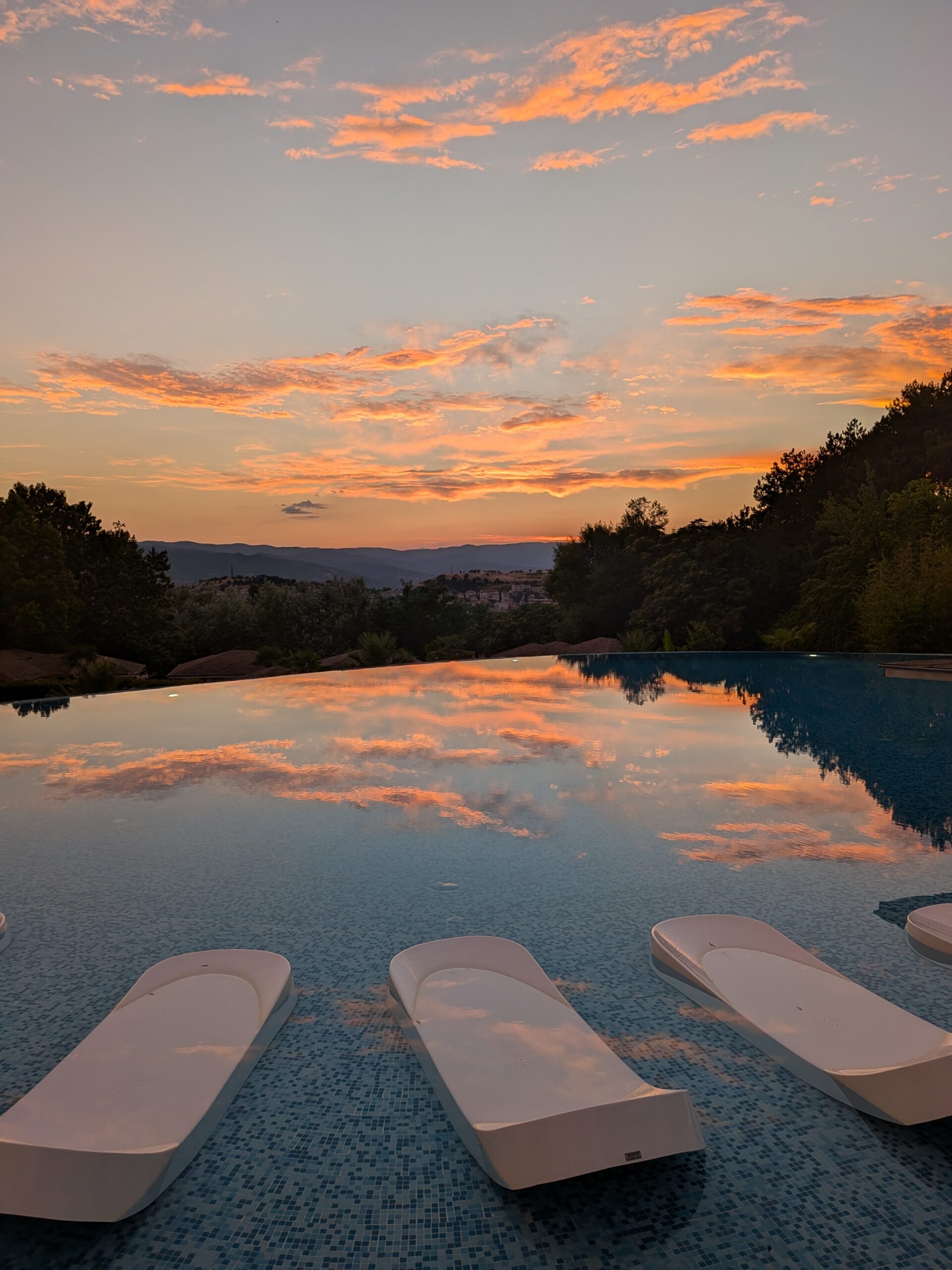
An idyllic sunset moment at a resort in Bulgaria.
|
|
|
|
|
|
|
|
|