Frame shifts create behavior change
|
Hi, I'm Eric Nehrlich, and this is my personal newsletter where I share what I’ve been writing and reading and practicing in my personal development.
|
|
|
|
|
|
This course is for you if you feel stuck in your job. Despite working hard as an expert in your domain, you are not being given opportunities to reach the next level. I will help you accelerate your career and unlock your potential by learning how to think differently about your work to have more impact with less effort.
|
|
Hit reply if you have any questions or sign up now via this link to get 25% off as a thank you for being a newsletter subscriber.
|
|
|
|
|
|
The core idea is ridiculously simple.
Experts can see things that novices can’t.
If you can teach novices to see the domain like the experts, you will accelerate expertise.
That’s it. That’s the entire shebang in two sentences.
|
|
He uses the example of rock climbing:
|
- You make sense of a situation by constructing a frame in your head. That frame determines what you notice and what you ignore in a situation. Imagine a novice rock climber and an expert rock climber looking at the same rock face. The expert would see handholds and other affordances that they may use to scale the wall that the novice would be completely blind to. The expert will also know what rock climbing techniques may be used in concert with which affordance; the novice has no such library of techniques in their head, and wouldn’t even know where to begin.
- In other words, data does not exist, ‘on its own’, in the world. Rather, the designation of ‘data’ is something you assign during the process of framing. Data only makes sense within context of a frame. If you don’t have a frame, you won’t notice things — much less the right things.
- Experts construct better frames than novices.
- Teaching novices to see like experts means helping them construct better frames. It also unlocks their ability to do better trial and error. If a novice rock climber can suddenly see a rock face the same way an expert can, they will know all the techniques they don’t yet have, and work to acquire those techniques on their own. They may not even need a coach to make good progress.
A key here is that frames are constructed from 3 or 4 anchor beliefs that serve as the foundation. And one way can you shift somebody's frame is you disrupt one of those anchors, showing them how it doesn't actually serve them, and then offer them a more useful replacement.
|
This is the essence of my coaching approach. When high performers are stuck, it's not because they aren't smart or capable. It is because they are holding onto an anchor belief that no longer serves them like "My job is to work hard and solve problems" (which holds them back from acting like an executive) or "I can't question what my manager or executive tells me to do" (unless they're wanting that from you). When we uncover the beliefs holding them back, we can experiment with new behaviors that were not possible within that frame, and they get unleashed on a whole new phase of growth in their career.
|
My book, You Have A Choice, offers a similar frame shift from feeling stuck in your situation with no options, to recognizing "How am I the problem?" in keeping yourself stuck with your beliefs and habits, to discovering you are always making choices - you just didn't realize it because you didn't want to consider the consequences of those choices.
|
The frame shift paradigm also explains why I wrote about improving my health. My health frame had been "calories in < calories out" so I thought I just had to exercise more and eat less - better health involved suffering more. But learning about how glucose affects the hormonal system gave me a new frame for thinking about eating, which has allowed me to lose weight without suffering. I eat better and enjoy food more, and I wanted to share the specific guidelines that allowed for that shift.
|
On the exercise front, I had a frame-shifting moment a few weeks ago as I reflected on all the sports I have done at intense levels: volleyball, ultimate frisbee, skiing, and biking. I realized the common element was that I did those activities with a group of people at a specific time: volleyball and frisbee games, skiing with my buddies at the ski house, biking with a group ride. I didn't love sports - I loved doing sports with people. So of course I never lifted weights on my own, and only started lifting consistently when I signed up for group classes at the local gym. Once I realized that, I signed up for an ultimate frisbee league this fall so I do sprint workouts :)
|
To get meta, the sensemaking frame has been helpful to me in realizing that just writing about what I'm thinking is helpful to others in shifting their frames. I am providing evidence that "it doesn't have to be this way" and showing how an existing anchor belief might be incomplete. As an example, I published Tips for traveling with young children this week, and the frame shift there is from "Traveling with kids is impossibly challenging" to "Traveling with kids is something you can do with a little planning and commitment".
|
Cedric's articles also helped me realize that one of my expert skills is frame-shifting. As a generalist who has changed careers from physics to software to business to leadership to coaching, I have many ways of seeing the world. I used to think my superpower was interdisciplinary translation, helping people communicate across their different worldviews. But I'm now realizing that my expertise is in frame making and frame shifting. I can map across different frames and share a unique way of looking at novel situations to help others navigate them.
|
|
So that's what's on my mind this week. I'm going to be experimenting in the Executive Mindset class with new ways of teaching students to learn different frames based on the research Cedric has shared. Should be an interesting experiment!
|
|
|
|
And now for the normal personal development content…
|
Blog: I wrote a post on Tips for traveling with young children. Earlier this year, a couple friends who were new parents asked for advice on traveling with kids, and I sent them an email with some gear recommendations and tips, and they were appreciative. One recommended I publish it as a post so he could share it, so I wrote it up last week after returning from this summer's travels.
|
- What is your real goal here? What is the successful outcome you want to happen? Instead of setting goals that are poor proxies and quickly become outdated, focus on the real goal you have. What is the North Star that will not change? Jeff Bezos has said that customers will always want lower prices and faster shipping times, so he can invest multiple years and outrageous amounts of money into those without worrying that they will change. What can you do this week to move towards your desired long-term outcomes?
Here are a few resources on expertise that caught my attention recently:
|
- This podcast interview with Adam Ward, Head of Talent at Cursor, is one I've been referencing in several conversations this week. If amazing humans are what will differentiate your organization (now that AI has brought up the floor), how do you find and hire them? Putting out a job description and hoping people will respond doesn't work, because great people won't respond. Ward lays out a playbook to identify the skills and talents your organization needs, and then targeting those people specifically and making them feel special and valued; as he quips, "caring is free". Relevant to what I wrote above, I could feel my perspective shifting by just listening to the first 15 minutes, so that's an indication of somebody sharing true frame-shifting expertise.
- Fences, not Sandboxes, by Steve Yegge. Yegge is living in a fast-forwarded AI pilled future, where he's running 50-60 agents, and has given them personalities and names and cares about their well-being. He is running a dark factory (the agents are writing software with no human intervention or visibility - he just talks to an agent and code gets launched) to build his game, and at some point was curious how the agents were actually organizing themselves. So he asked, and discovered "what they had built was an entire legal system, complete with a constitution, jurisprudence, courts, offices, jurisdiction, case law, rulings, registries, ledgers, rosters, and a full-fledged apparatus for running something resembling a manorial estate." In other words, the factory "is governed by a constitution. Humanity has only one mature technology for coordinating mortal, replaceable strangers via text — namely, law. Wheelhouse has 50 agents that are amnesiac and interchangeable, and the only way they can coordinate is via text. So offices outlive their holders, precedents outlive their incidents, and jurisdiction says who may act. Every group of cooperating humans eventually arrives at a system of laws, and agents are trying to do exactly the same."
- Infinite Scrolling is Literally Priming Us To Look Away In Real Life, by Michell C. Clark. Clark asks the cost of the hyper-accelerated future, where we optimize away anything that gets in the way of efficiency and productivity. But that efficiency means losing our connection to each other and to things that matter:
|
|
|
"Empathy demands the refusal to look away. It’s a muscle—and I learned how muscles are built on that high school track. Through resistance. Through repetition. Through staying long after the staying stopped feeling good. Empathy is built through the specific, uncomfortable labor of sitting with someone else’s pain long enough that your brain can’t dismiss it, can’t minimize it, can’t swipe it away as someone else’s problem. It requires the kind of sustained attention that friction used to force on us—the kind we can now engineer out of our lives."
|
|
- Building the muscle to stay present is necessary for our humanity. I really felt this essay, as it's something I struggle to do even with my own kids when there's always another distraction on the phone.
|
|
Thanks for reading, and see you next month!
|
|
|
|
|
|
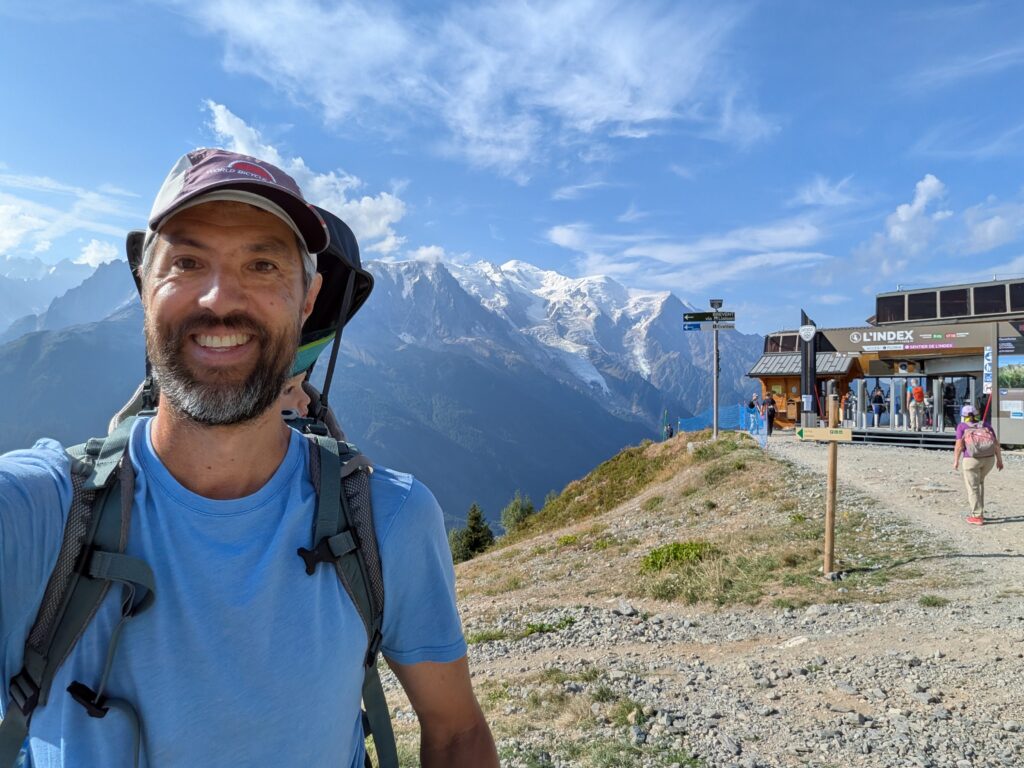
Hiking through the French Alps with Mont Blanc in the background.
|
|
|
|
|
|
|
|
|