What's working for my health
|
Hi, I'm Eric Nehrlich, and this is my personal newsletter where I share monthly what I’ve been writing and reading and practicing in my personal development.
|
|
|
|
|
|
I didn't really commit to my health until I turned 50, but changed my routine the last couple years in ways that made a noticeable difference: I lost weight, my body-fat percentage went down, I got stronger, my body works better, and I am calmer than I have ever been.
I share about that journey in the blog post I link below, but more importantly, I share how my own sense of powerlessness stopped me from taking the simple advice of “eat healthier and exercise more” for most of my life:.
How did that change? One small step at a time.
It wasn’t one big revelatory epiphany upon turning 50. It was taking one small step (signing up for the gym), then another (experimenting with cutting down carbs in my diet), then another (scheduling my workouts first before coaching calls), then another (committing to move more each day).
Each step helped to build a positive spiral where working out more led to sleeping better led to better executive function led to eating healthier. And with that structure mostly locked in, my identity has shifted from “I can’t do anything about my health – it’s just the way it is” to “I can choose each day to live a little healthier”.
While the results have been great, it took weeks or months or years for the results to become noticeable. I learned to get satisfaction from taking action each day, rather than do it for future results.
But now I love going to the gym and feeling strong and pushing my limits and joking around with the trainers. I enjoy the taste of healthy fresh fruits and vegetables and have realized how bad processed food actually tastes. I treasure how much better I feel after a good night’s sleep.
My epic 4,000 word blog post shares more details on the guiding principles, how I changed my diet, my current exercise routine, the observable results, and how I overcame my resistance to taking care of myself: https://www.nehrlich.com/blog/2026/06/20/whats-working-for-my-health/
|
|
|
|
And now for the normal personal development content…
|
- Scott Amenta and I had a great conversation on his Chief of Staff podcast about the role of a Chief of Staff in the age of AI where business realities are changing weekly. My take: AI offers the Chief of Staff the opportunity to automate the routine parts of the job (dashboarding, reporting, budget and headcount management) so they can focus on aligning the org around a common purpose and using AI to accelerate productivity towards that goal. Take a listen here.
- How do you balance urgent short-term against important long-term priorities?
This tug-of-war is a constant dilemma. If we ignore the urgent requests, we don't build the credibility and trust needed for the long-term projects. If we prioritize the short-term work, we never create the focus time to build for the long-term. So how do you make time to think strategically about where you're going, rather than just attack the tasks in front of you?
- AI boosts productivity, but it doesn't tell you what's worth doing or where to go.
I've been having versions of this conversation with many leaders in private coaching conversations - they want their orgs to do more faster, but I push them to clarify who and what they are serving to align their teams on a common direction to avoid chaos. While AI agents can automate the operational work, they will not answer strategic questions like "Who are we serving?", "What is our purpose?", and "How will we serve our stakeholders and purpose this week?" Communicating consistent answers to those questions is the essence of leadership when people have greater autonomy.
Here are a few things on personal development that caught my attention recently:
|
- Becoming yourself is a social project from velvet noise. We often get stuck because we don't know what to do next, but help may be available from somebody we already know if we were only willing to share our uncertainty. I loved the reminder that "Most of us are surrounded by more care, intelligence, and help than we know how to access. Maybe part of reaching your potential is learning how to become easier to help."
- The Answer to Every Problem by David Cain: "Do what has to be done, when it has to be done, and do it that way every time." This sounds too simple, but he goes through the objections one by one - we often know what to do (as I did with regards to my health), but find excuses not to do it. Cain's wry observation: "The mind insists that reality must be wrong. If you accept reality, then what? Well, you have to conform to reality, which means you have to change." It's a reminder that we have a choice in every moment: "You can return to [doing what has to be done] in a single moment, no matter what’s happening, with the smallest possible act."
- Your Values Are Nothing If They Aren't Tested, by Ijeoma Oluo. You might say you believe in inclusion, but do you work to include people who differ from you? You might say you don't believe in punishment in the form of prisons, but shun and shame those who disagree with you. Oluo calls out activism as being about more than protests: "Each of us matter and how we live matters. And if that is true, there is victory in every step we take toward each other, in every way in which we care for each other, in every bit of change we can create. ... we can’t fight for a future we aren’t willing to live now. What we do and how we do it is the work, it is what lays the path that we are walking towards." How does this tie into values? "Values are the things that we feel will make our lives better, not easier. And sometimes what would make our lives easier is in direct conflict with what would make our lives better."
|
|
Thanks for reading, and see you next month!
|
|
|
|
|
|
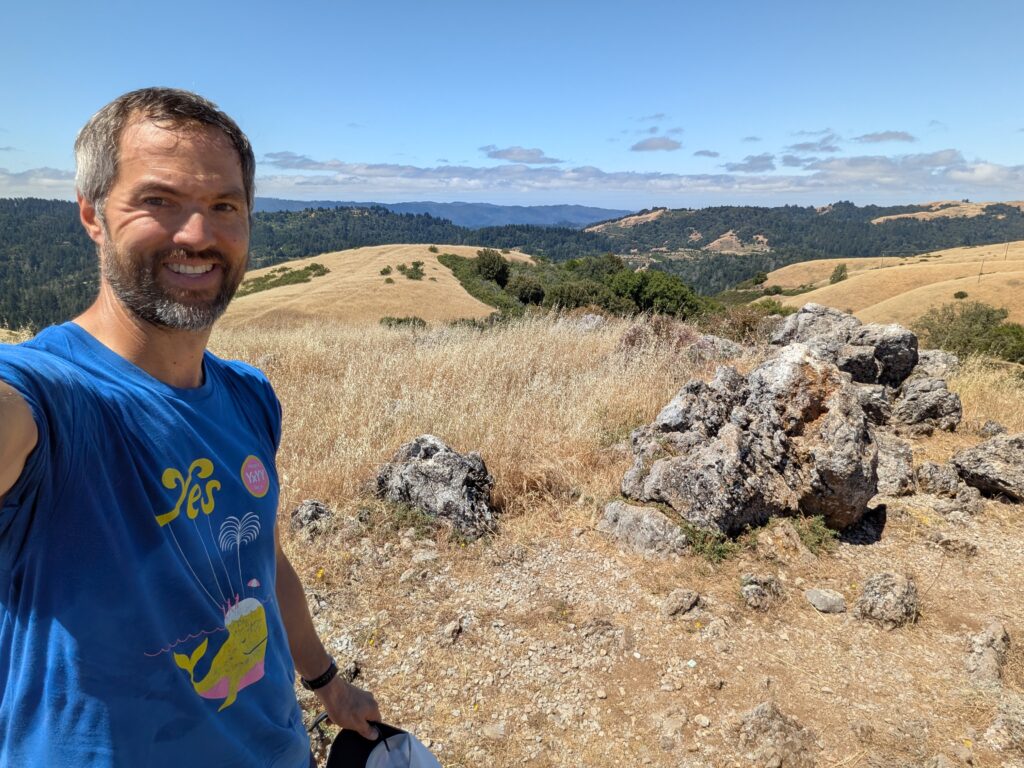
To celebrate my birthday each year, I like to do a more intense excursion. This year, it was hiking Black Mountain on a hot day - 11 miles, 2700 feet of climbing.
|
|
|
|
|
|
|
|
|