Inspired again to read and write (a lot)
|
Hi, I'm Eric Nehrlich, and this is my personal newsletter where I share monthly what I’ve been writing and reading and practicing in my personal development.
|
|
|
|
|
|
I went to a 10-day workshop with Lynda Caesara in late March that was a powerful reset for me. Not only did it help me restart a meditation practice, it calmed my nervous system down so that I could focus more on what was important to me. Since returning, I've been more interested in reading books than scrolling, more likely to follow through on my intentions, and more motivated to write than I have been in years.
|
As a result, I've read more books than usual in the last couple months - the links below are either to my blog writeups or my goodreads reviews:
|
- The Stimulated Mind, by Dr. Tommy Wood. I read this book on how to "future-proof your brain from dementia" after hearing Wood on the Tim Ferriss podcast. The most important takeaway is that your brain and body are efficient. If you stop using a function, the body adapts to invest less resources in that function. So if you use your brain less, the brain gets less blood and oxygen because the body doesn’t want to waste precious resources on something that’s not valued. Keep challenging your body and brain with new stimuli to keep them functioning at top capacity.
- Founder Unfriendly, by Charlie O'Donnell. Charlie is a long-time friend from when I lived in New York, and I actually invested as an LP in one of his venture capital funds. In this book, he shares his insights on how to navigate the fundraising process, drawing on his experience as a 20-year veteran of the venture capital industry, with stints at Union Square Ventures, First Round, and running his own fund, plus being a failed founder himself. He tells it like it is, so that any reader can gain the knowledge of how the game actually works to navigate it more effectively.
-
|
What Actually Matters: Startups, Capital, and the Rules Nobody Taught Us, by Lolita Taub, a book for first-time founders, angels, GPs, LPs, and ecosystem builders who didn't grow up with the map. Lolita is somebody I respect deeply, as somebody who has started from the most humble of beginnings as an immigrant from Mexico, and navigated her way to become a venture capitalist and ecosystem builder one hard-won step at a time. Her book isn't available yet, but I read a beta copy, and highly recommend it. As I shared in my blurb,
|
|
|
|
Lolita Taub has worked her way through every role in the venture capital ecosystem, and wrote this book to share what she learned so you can make better decisions with your time and resources. Whether you are a founder, an investor or an ecosystem builder, Taub offers specific battle-tested advice to help you avoid common pitfalls and understand how stakeholders make decisions. This book is the best investment you can make in your own success.
|
|
- Crisis Engineering: Time-Tested Tools for Turning Chaos into Clarity by Marina Nitze, Matthew Weaver, Mikey Dickerson. Step by step guide to identify a crisis (a high leverage opportunity to change the status quo driven by an urgent deadline), spin up a crisis engineering center, recruit a team, build a system map, take novel actions to change the current outcomes, and eventually gracefully end the crisis response. Great playbook with specific advice to handle these situations, and even use them to drive meaningful long-lasting organizational change.
- Finding Light Through the Cracks: Reinventing Democracy with Audrey Tang by Martin Rausch. I knew nothing of Taiwan's governmental innovation and loved reading the stories of how they included people's perspectives in a diverse set of ways to surface disagreements, find "uncommon ground", and develop new possibilities together. This book suggests that democracy and citizenship can be "fun, fair and fast", which feels like a great improvement on the version currently offered in America.
- Seeing Systems, by Barry Oshry. I loved this book, but haven't written it up yet in part because the insights overlap heavily with Oshry's book Leading Systems, which I wrote up here.
- Inside the Box: How Constraints Make Us Better, by David Epstein. Setting limits on yourself fuels creativity and productivity. If you can do anything, you waste time and energy deciding what to do. If you put bounds on your process (work at this time in this place) or content (preclude certain approaches, experiment with new ones), you put that energy into creation instead.
- A Parade of Horribles, by Matt Dinniman. Dungeon Crawler Carl book 8 dropped a couple weeks ago, and I read it in two days (in part because I had kids waking up in the middle of the night and I had to cuddle them back to sleep). As my friend Cedric described it after he started the series because people like me shared their excitement for book 8, "The sense of humour is clearly very lowbrow. But it’s such great trash. Extremely high quality trash."
-
What to Make of a Life: Cliffs, Fog, Fire and the Self-Knowledge Imperative, by Jim Collins. The key idea of the book is what Collins calls encodings, which he describes as “durable capacities of a person’s intrinsic construction that lie within, awaiting discovery through the experiences of life”. It’s a vague concept, and not one that can be supported by scientific evidence, but it makes intuitive sense. He describes Jimmy Page picking up a guitar for the first time, or John Glenn piloting a plane when he was 16 years old, where they just felt a click and knew this was something they were meant to do. Collins calls this finding your “personal hedgehog”, where you commit “to organize your life and channel a huge chunk of your energy toward the pursuit of this One Big Thing”. The rest of the book talks about how different people have found their encodings while navigating tragedies and getting lost in personal fogs, finding their way back to an inner fire that lights them up and keeps them going.
|
- This book was interesting enough that I was inspired to reflect on how the patterns and themes that Collins described applied to my own life in a post I cleverly called What to Make of My Life.
Yowza. That's a lot of books! Writing up books for the blog is a great way to kick start my writing habit again, and get my brain thinking again as it bounces ideas from these different sources off of each other. Plus the constraint of writing weekly for the Executive Mindset newsletter has been good at rebuilding the writing habit as well.
|
I feel like I am starting to get back to the thinker I want to be: ingesting ideas from many sources, finding my own patterns to integrate those ideas, and then writing about those patterns so other people can learn from my understanding. That's my "encoding", my "personal hedgehog" (to use Collins's terms): connecting the dots with different frameworks to make sense of experiences in a new way.
|
|
I intend to share more of those explorations and discoveries in this newsletter. Let me know what you think!
|
|
|
|
And now for the normal personal development content…
|
- In the AI gold rush, discernment will matter more than ever. Enhancing speed and productivity is great. But without direction, you can spend a lot of effort running in circles. So where will you aim? For whom are you building? Those are purpose and values questions, not technical questions. They require deep thought and consideration, because when everybody has the same productivity tools, going faster won't be a differentiator - choosing the right things to build will be.
Here are a few things on personal development that caught my attention recently:
|
- The teacher from my workshop, Lynda Caesara, teaches what she calls the Basics of mindfulness, where you center yourself in your essence, you ground yourself in the earth, you discard and push away any outside influences and set a strong edge boundary to keep them out (Me / Not Me), and you align your chakras. She describes the practice in this podcast episode if you want to learn more, and after coming back, I made my own abridged 11-minute version which you can listen to here. This practice has been helpful for me to keep myself grounded and centered (and more productive!).
- Incorruptible by Design, a Long Now talk with Eric Ries of Lean Startup fame. Ries noticed a pattern where every company fell into the same dysfunctions as they grew, no matter how idealistic they were in their startup days. He got curious, and believes it's due to the corrosive effect of what he calls financial gravity, the theory that increasing shareholder profits is the sole and only purpose of companies, ignoring all externalities that are less easily quantified. He challenges that view by asking us to redefine profit as maximizing human flourishing, and points out that we have examples of big companies that do so like Patagonia and Costco, so it's certainly possible. I haven't read his book yet (it comes out next week), but appreciated his willingness to point out that we have a choice, and we don't have to accept the defaults that everybody else falls into without realizing it.
- Tim Ferriss shares this story from Jerzy Gregorek, an Olympic weightlifting champion and coach who started training a man with cerebral palsy and changed his life, one micro-progression at a time. When they started, Tae Jin was 25 years old and unable to even go to the bathroom by himself - his parents had to do everything for him. 5 years later, he was bench pressing 160 pounds, walking normally, living independently, and enrolled in community college. They made a 30 minute documentary available on YouTube, and the transformation is amazing. I loved Jerzy's coaching approach of meeting Tae Jin exactly where he was, and then pushing him to take one small step forward at a time from there. Those small steps added up!
|
|
Thanks for reading, and see you next month!
|
|
|
|
|
|
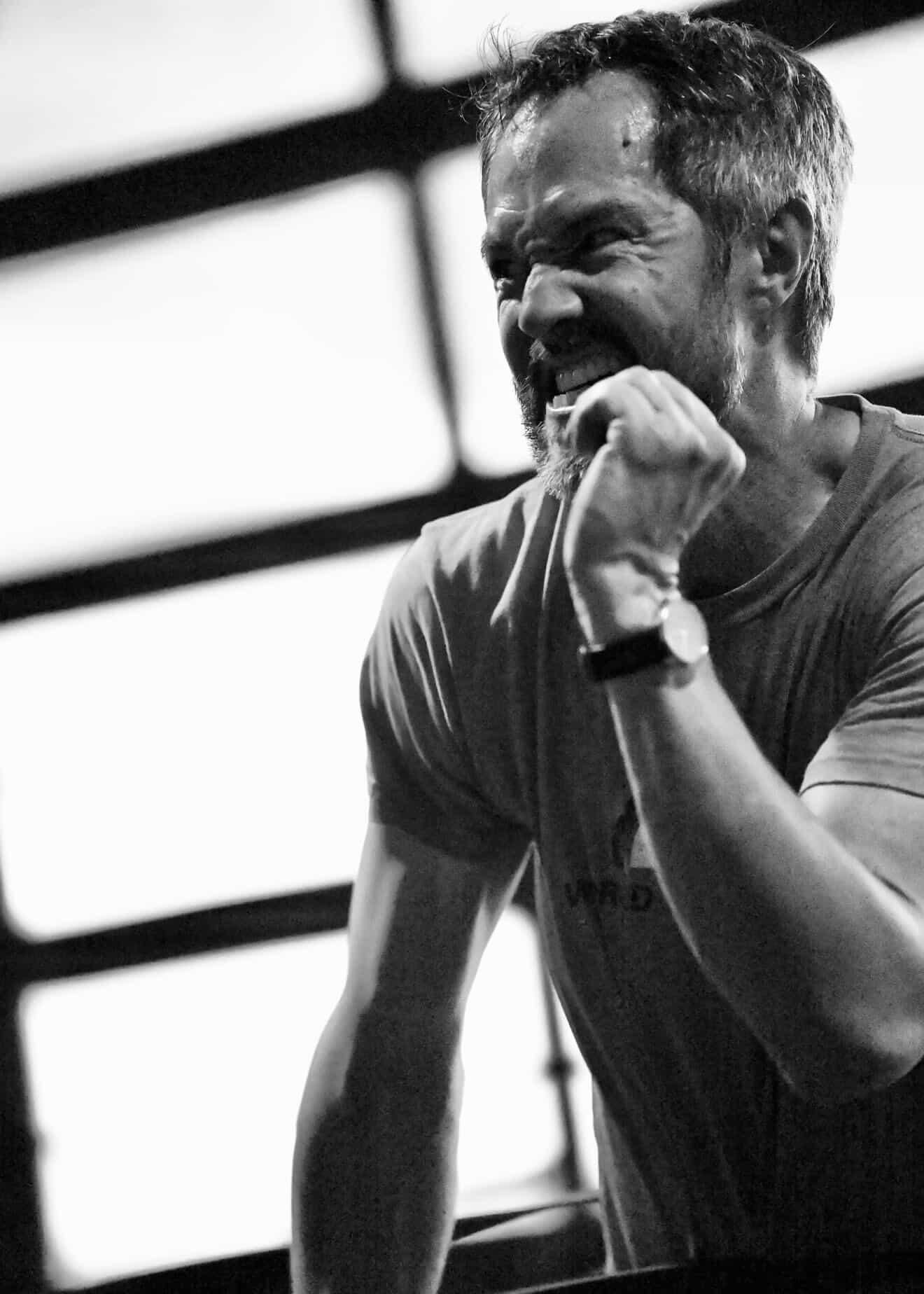
The photographer at the gym has been taking pictures of me pushing myself during workouts. I've been collecting videos they take in this Google Photos album but I cracked up when I saw him post this dramatic black and white photo.
|
|
|
|
|
|
|
|
|